Brackets & Mounts
Sensor brackets, standoffs, equipment mounts, supports, and installation adapters.

Replacement parts / custom FDM manufacturing
Broken, discontinued, or impossible to source? Let's evaluate a replacement instead of replacing the whole assembly.
Relay Manufacturing recreates custom plastic components for machinery, equipment, products, and older assemblies. Start with CAD, drawings, photos and dimensions, or a physical sample. We review fit, environment, and manufacturability before quoting.
Photos can start the conversation. Critical mating geometry may require measurements, CAD, or a physical sample before production.
Broken / discontinued / obsolete
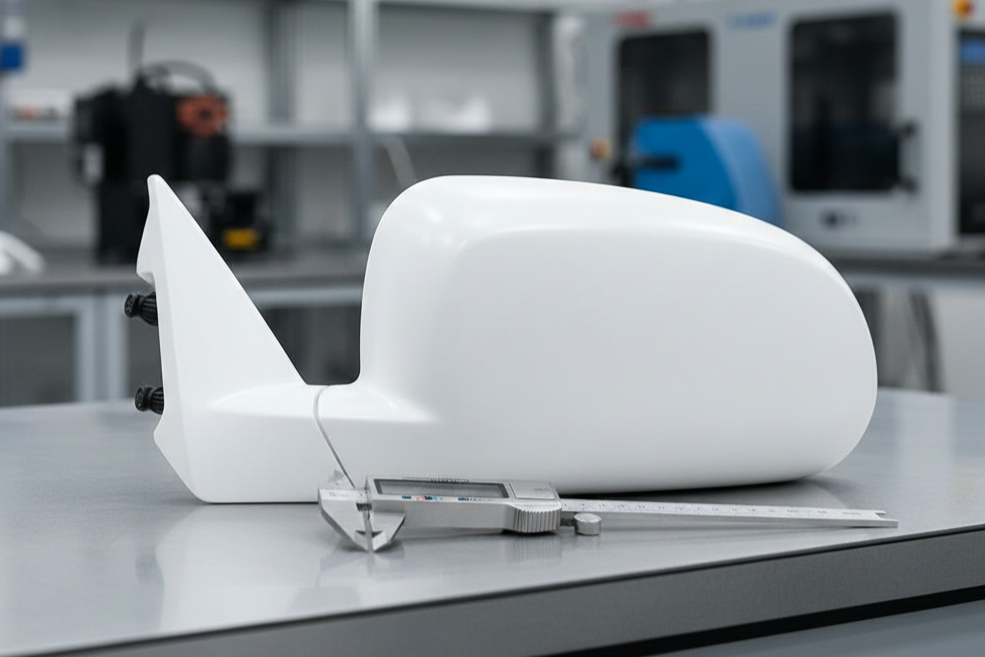
A plastic bracket cracks. A machine cover disappears from the parts catalog. A small clip is sold only with an expensive assembly. For older equipment, the original drawings may be lost entirely.
Custom 3D printing can make sense for obsolete plastic replacement parts, low-demand spares, and hard-to-source components where tooling a new mold would be impractical. Relay evaluates the original part's function and constraints before choosing a replacement material and build strategy.
For more complex geometries, reverse engineering may start from a sample, photographs, measured interfaces, drawings, or an existing CAD file. The objective isn't simply to print a shape; it's to make a component that interfaces with your actual assembly.
Ask whether your part is a candidate →Applications / replacement component types
Not every plastic part is a good FDM candidate, but many non-safety-critical components are worth evaluating. These are the kinds of requests we can review.
Sensor brackets, standoffs, equipment mounts, supports, and installation adapters.
Protective shells, control covers, access panels, and project-specific cases.
Retention tabs, low-load snap features, clips, and replacement latches.
Non-critical manual controls, handles, grip components, and caps.
Bushings, sleeves, standoffs, locating pieces, and odd-size interfaces.
Equipment trim, bezels, non-critical decorative panels, and covers.
Non-safety-rated protective components and practical shop hardware.
Repeat batches of discontinued parts after fit and material validation.
From broken component to new part
Whether you're responsible for maintenance, product development, or a small replacement run, we keep the starting point straightforward and the technical decisions explicit.
Send CAD, a drawing, a physical sample, or photos with a ruler and critical measurements. Tell us what the part fits.
We examine mating features, stresses, heat, UV, chemicals, quantity, and whether printing is appropriate.
When needed, we quote CAD recreation separately. A test print or iteration may be recommended for critical fits.
Once the design is approved, manufacture the replacement or a short run; repeat builds can reuse the approved CAD.
Photos, rough size, part number, equipment make/model, and what it does are enough to begin a feasibility discussion. Email photos after or instead of the contact form. Geometry work is scoped during quoting.
Email Photos & Dimensions ↗Use Relay's existing CAD quote tool for preliminary FDM pricing. Include quantity, fit requirements, material, and notes so we can review the formal quote.
Upload CAD for an Estimate ↗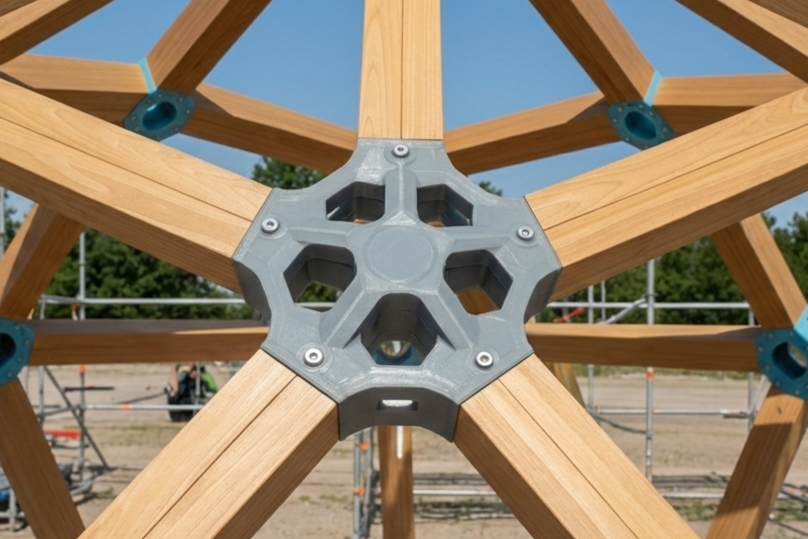
Reverse engineering / remanufacturing
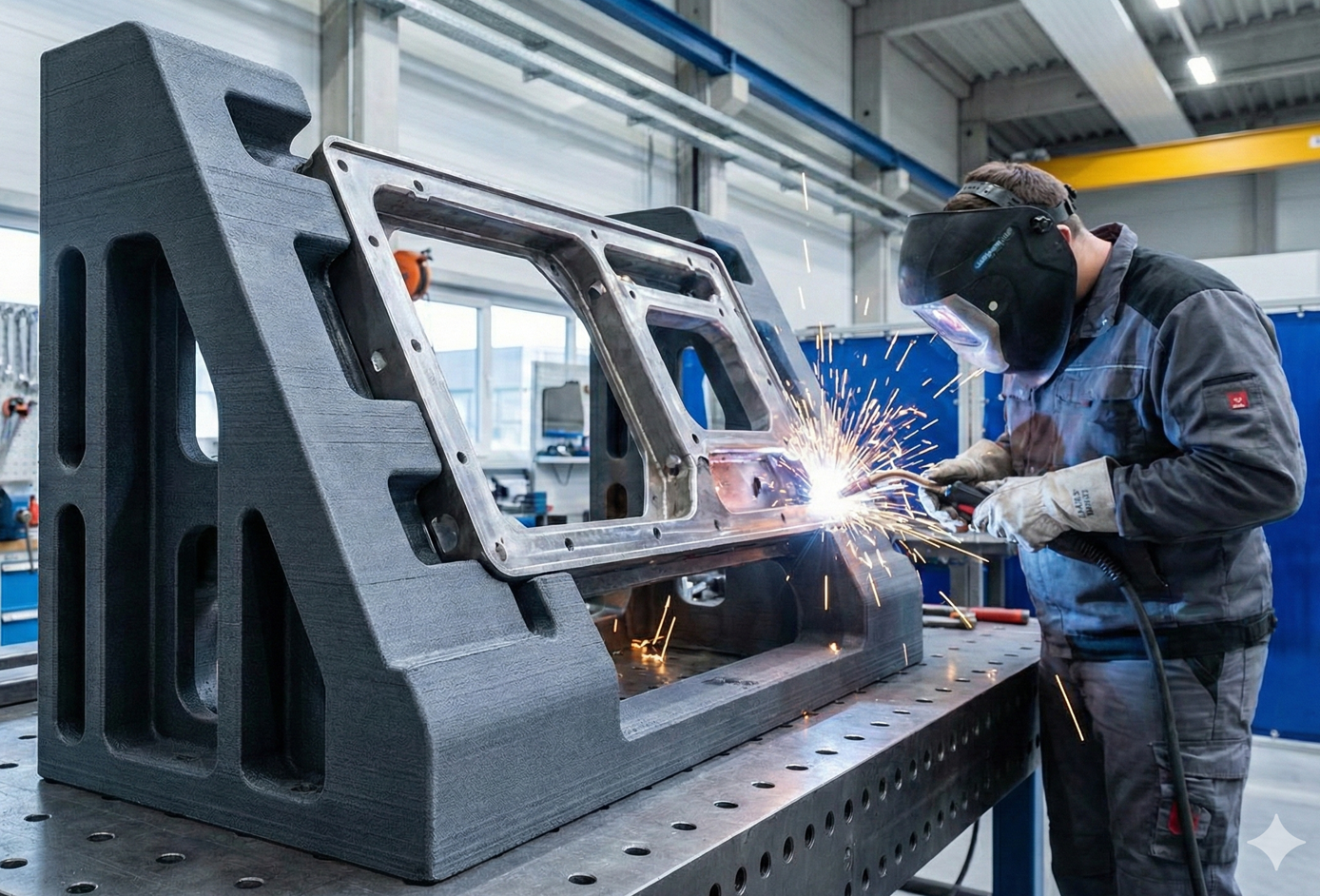
When a plastic component is broken or discontinued, the most important features are often the least obvious: hole spacing, clip engagement, seating surfaces, thread positions, wall thickness, and clearance to other parts.
We can evaluate a replacement plastic component from a sample, even if your drawings are missing. Depending on complexity, the job may require measurement, CAD reconstruction, fit testing, or several revisions. Reverse-engineering labor is quoted separately from printing.
For OEMs and maintenance teams, an approved digital model can become a repeatable spare-part reference rather than a one-off repair. Ownership and authorized reproduction of customer designs must be established before proceeding.
What helps us quote accurately?
Replacement-part material choices
A replacement does not always need to use the same resin as the original. Heat, stiffness, impact, outdoor exposure, and flexing requirements inform material selection and print orientation.
Practical general-purpose material for brackets, covers, and functional components with moderate temperature requirements.
PETG 3D printing ↗Engineering thermoplastic for tougher indoor housings, utility components, and assemblies requiring more heat performance than PLA.
ABS parts ↗Useful for UV-exposed and outdoor equipment components when environmental durability matters.
ASA printing ↗Flexible parts, grips, feet, cushioning, and certain low-load compliant replacement features.
TPU printing ↗Stiffer engineering components and fixtures where the expected stresses and geometry justify a reinforced polymer.
Carbon-fiber nylon ↗Not sure what the original plastic was? Send your service conditions. We'll evaluate options before manufacturing.
Discuss material selection ↗We can evaluate one-off plastic components, maintenance spares, CAD reconstruction, and repeat low-volume replacement runs for real equipment and products.
Frequently asked questions
Often, yes, especially for non-safety-critical covers, brackets, adapters, clips, housings, and similar components. Send the part number, product or equipment model, photos, and dimensions so we can assess feasibility.
Photos can be enough to start the discussion and give an initial assessment. Accurate production may require precise measurements, additional views, an existing CAD model, or a physical sample. We do not promise a fit based on an image alone.
We can evaluate CAD reconstruction from a damaged sample or other physical references. The scope depends on how much geometry is missing, what has to fit, and whether mating parts are available. CAD and physical printing are quoted as separate work when appropriate.
A photo or drawing, overall dimensions, critical hole spacing and mating features, the equipment name and part number, quantity, operating environment, and target date are useful. If you already have STEP, STL, or 3MF, use the CAD quote tool.
They can be, when the material, design, loads, orientation, and operating conditions are appropriate. Printed layer interfaces and material behavior differ from injection molding. For important components, fit and service tests should be planned.
Some non-critical gears, bushings, guides, and light-load moving components may be candidates, but wear, tolerances, friction, and fatigue need extra evaluation. We cannot assume a printed part will safely replace a molded or machined component.
We evaluate one-off prototypes, individual functional replacements, and repeat low-volume production. An initial design or fit validation step may be required before a larger run.
Some uses are not suitable for standard FDM manufacturing. Automotive safety systems, guarding relied on for operator safety, load-bearing equipment, electrical safety components, food-contact devices, and pressure parts require additional review and may be declined. We never assume printed plastic is certified for those uses.
Yes. Start by describing the project or emailing photos and dimensions. If a physical sample is needed, we can discuss how to handle it after reviewing the request.
Replace the part, not the entire machine.
Tell us what failed, what it fits, and what you need the replacement to do. We'll review whether CAD reconstruction and 3D printing are a practical path.