
TPU 3D Printing Services for Flexible Functional Parts
Flexible geometry engineered around how the part needs to bend, grip, absorb, protect, or recover.
Relay uses FDM TPU for flexible prototypes and functional parts such as protective interfaces, bumpers, grips, compliant mounts, strain reliefs, feet, and vibration-damping components. Send the CAD and application—we’ll evaluate hardness, geometry, loading, environment, and whether TPU is the right route.

Use flexibility as a design feature.
TPU is useful when a part needs controlled compliance, impact absorption, grip, abrasion resistance, or repeated flexing—not simply because a rubber-like filament sounds convenient.
Vibration Isolation
Compliant mounts, pads, feet, and interfaces.
Bumpers & Protection
Impact-absorbing covers, guards, stops, and contact features.
Grips & Interfaces
Textured or compliant contact surfaces for equipment and fixtures.
Strain Reliefs
Flexible transitions and cable-routing features.
Flexible Housings
Parts that deform during installation or use and recover afterward.
Gasket-Like Geometry
Some low-pressure compliant interfaces, subject to sealing requirements.
Shore hardness is only part of how the finished part feels.
Wall thickness, infill, perimeter count, geometry, orientation, and feature size can change the apparent stiffness of a printed TPU component dramatically.
That makes TPU powerful for engineered compliance—but copying a rigid-plastic design and only changing the material is rarely the best approach.
Compression, bending, repeated flexing, grip, impact, abrasion, vibration, recovery, and mating surfaces all matter.
Mounting holes, sealing surfaces, snap features, cable paths, contact faces, and controlled dimensions.
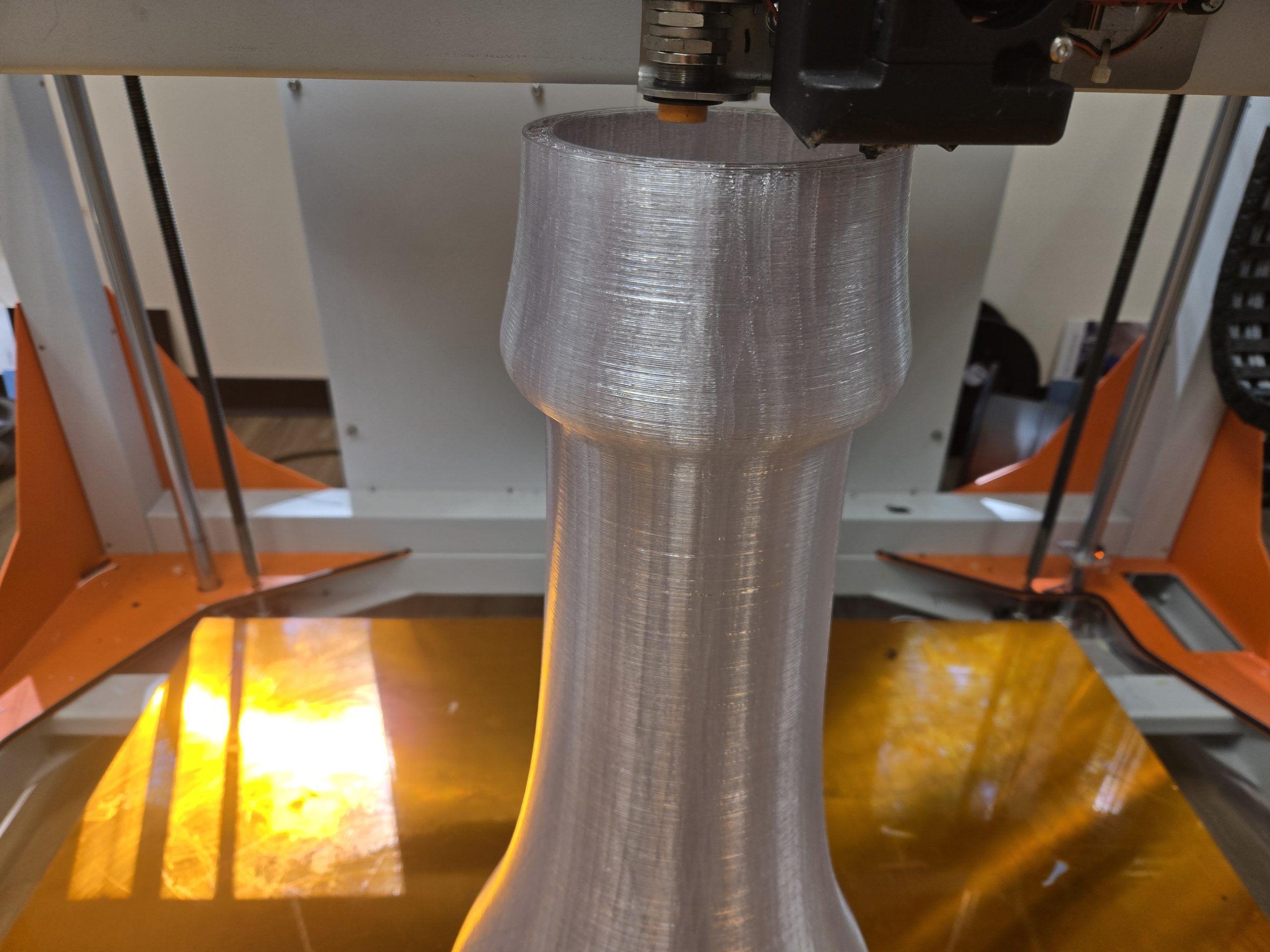
Flexible does not automatically mean TPU.
TPU can be excellent for custom flexible geometry, rapid iteration, and low-volume parts. Silicone or molded elastomers may be better when demanding sealing, very soft behavior, temperature, chemical exposure, certification, or larger production economics drive the project.
If the part needs a rigid spring feature rather than elastomeric behavior, nylon or another engineering polymer may be a better route.
Is TPU suitable for end-use parts?
Often, when the selected material and printed geometry meet the mechanical, environmental, dimensional, and service requirements.
What Shore hardness should I use?
Start with required behavior rather than a hardness number alone. Geometry and print construction also affect the finished response.
Can TPU be used for seals or gaskets?
Sometimes, but compression, finish, fluid compatibility, pressure, temperature, geometry, and allowable leakage all matter.
Can TPU be used for low-volume production?
Yes when FDM TPU meets the requirements and the quantity does not justify a different production process.
Send the CAD and tell us how it needs to behave.
Include quantity, desired flexibility, loads, environment, contact surfaces, critical dimensions, and any material or hardness requirement you already have.