
Low-Volume 3D Printing Production
Move from validated design to repeatable plastic parts—without committing to hard tooling.
Relay supports pilot runs, bridge production, repeat orders, replacement components, and low-volume end-use parts. Send the CAD, quantity, application, and requirements; we’ll evaluate the practical production route rather than force every job into the same process.
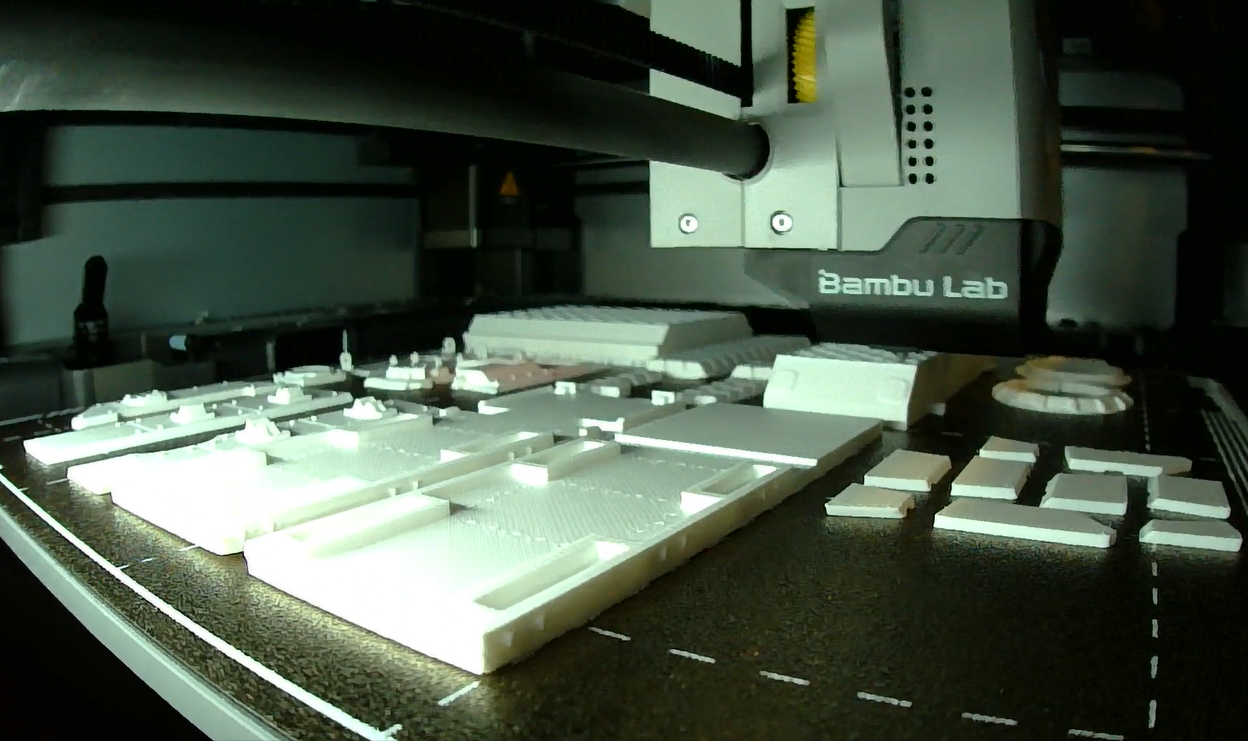
Production quantities without production tooling.
Low-volume additive manufacturing is useful when the part is ready to work but the economics, timeline, or design maturity do not justify a mold or other dedicated tooling. Quantity matters—but geometry, material, finish, tolerance, and the cost of future changes matter too.
Pilot & Pre-Production Runs
Build saleable or field-test quantities while the product, supply chain, or production process is still being validated.
Bridge Production
Keep projects moving while molds, tooling, or a longer-term manufacturing process is being developed.
Repeat Low-Volume Parts
Reorder functional components in practical batches without carrying dedicated tooling or large physical inventory.
Replacement & Legacy Parts
Produce components where original tooling is unavailable, obsolete, or economically difficult to recreate.
Variants & Custom Configurations
Support multiple geometries, sizes, or revisions without creating new tooling for every version.
End-Use Plastic Components
Housings, brackets, mounts, covers, interfaces, and other functional parts when additive meets the real application requirements.
Do not buy a mold just because the prototype is finished.
The right transition point depends on the complete part economics—not an arbitrary quantity threshold. Additive can remain competitive when volumes are modest, designs change frequently, geometry is difficult to tool, multiple variants are needed, or carrying inventory creates more risk than producing on demand.
When another process becomes the better production answer, Relay can evaluate that instead of pretending FDM is always the solution.
A production RFQ starts with the part and the demand.
You do not need to choose the manufacturing process before contacting Relay. Give us enough context to understand what the part must do and how many you actually need.

Repeatability starts before the print begins.
A production part is more than a prototype printed multiple times. Build orientation, material behavior, critical dimensions, interfaces, support strategy, finishing, and inspection expectations should be considered with the application and quantity.
Relay’s role is to help turn the CAD into a practical manufacturing plan—especially when you are deciding whether to stay additive, change process, or revise the part for more reliable production.
Low-volume production without a made-up quantity cutoff.
The economic crossover changes from part to part. Relay evaluates the actual geometry and requirements rather than defining low volume as a single universal number.
What quantities make sense for 3D printed production?
There is no single cutoff. Part size, geometry, material, machine time, finishing, inspection, reorder frequency, and tooling alternatives all affect the answer. Send the expected batch and annual quantity so the process can be evaluated in context.
Can I reorder the same parts later?
Yes. Digital manufacturing is especially useful for repeat batches because the production file can be retained without storing dedicated molds or tooling. Any design revision should be identified so the correct version is produced.
Can the design change between production runs?
Yes. One advantage of additive production is that geometry can be revised without replacing a mold. Changes should still be reviewed for material, printability, fit, and performance before the next run.
Is FDM the only process Relay can evaluate?
No. FDM is Relay’s core focus, but requirements such as finish, geometry, batch economics, material, or scale may point toward another manufacturing route.
Send the CAD, quantity, and what the part needs to do.
Relay will review the application, material requirements, batch size, and production constraints and help determine a practical route from current design to delivered parts.