
ASA 3D Printing Services for Outdoor & UV-Resistant Parts
Functional plastic parts designed for sunlight, weather, heat, and real outdoor service.
ASA is a strong FDM candidate for outdoor housings, brackets, covers, fixtures, replacement components, and equipment parts where UV stability and weather resistance matter. Relay reviews the environment, load, interfaces, quantity, finish, and service conditions before recommending the material.
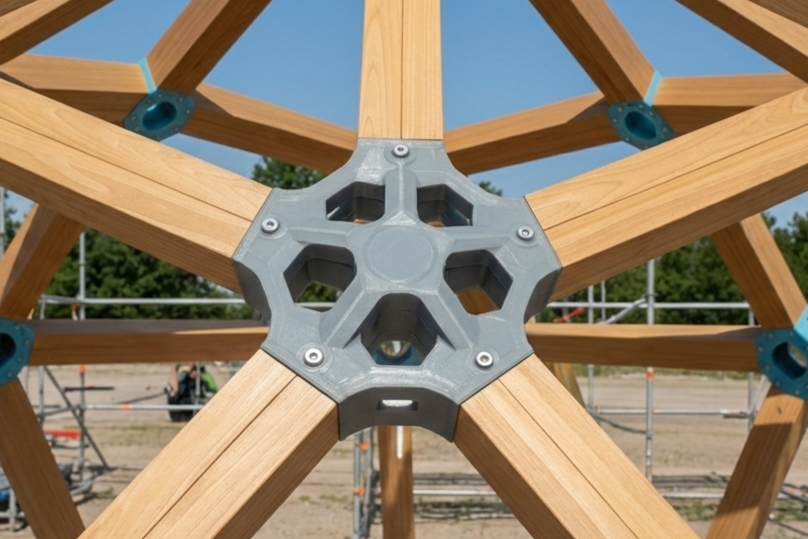
When the part has to live outside—not just survive the prototype bench.
ASA's value is the combination of mechanical usefulness with improved resistance to sunlight and weathering. The application still determines whether the printed geometry, grade, orientation, and finish are appropriate.
Outdoor Housings
Electronics, sensors, controls, covers, and equipment enclosures exposed to sunlight.
Brackets & Mounts
Functional supports and interfaces for outdoor equipment and installations.
Replacement Parts
Low-volume components where original tooling is unavailable or uneconomical.
Fixtures & Production Aids
Tools and aids used in semi-exposed or outdoor work environments.
Exterior Prototypes
Full-use prototypes that need realistic weather exposure before harder tooling.
Short-Run End-Use Parts
Repeat batches without committing to molds when additive economics still fit.
Vehicle & Equipment Accessories
Custom covers, interfaces, mounts, and non-safety-critical exterior components.
Architectural / Site Hardware
Custom plastic geometry for installations where UV and weather exposure matter.
“UV resistant” is not the whole specification.
Outdoor parts also see temperature cycling, water, dirt, chemicals, fastener loads, creep, impact, and dimensional demands. Color, surface finish, section thickness, orientation, and the specific ASA formulation can also affect long-term behavior.
ASA is often compared with ABS and PETG. ASA is generally chosen over ABS when weathering/UV exposure is important; PETG can be easier to process and tougher in some contexts, but the exact choice depends on the grade and service environment.
Our linked ASA Outdoor & UV Resistance Guide compares manufacturer TDS data, printed-part properties, chemical/weather considerations, and safety notes.
ASA Outdoor & UV Technical Guide
See representative Bambu Lab, Prusament, and Polymaker data; understand why values differ; and review heat, chemical, UV, print-process, and safety considerations.
Read the ASA technical guide →ASA prints need process control.
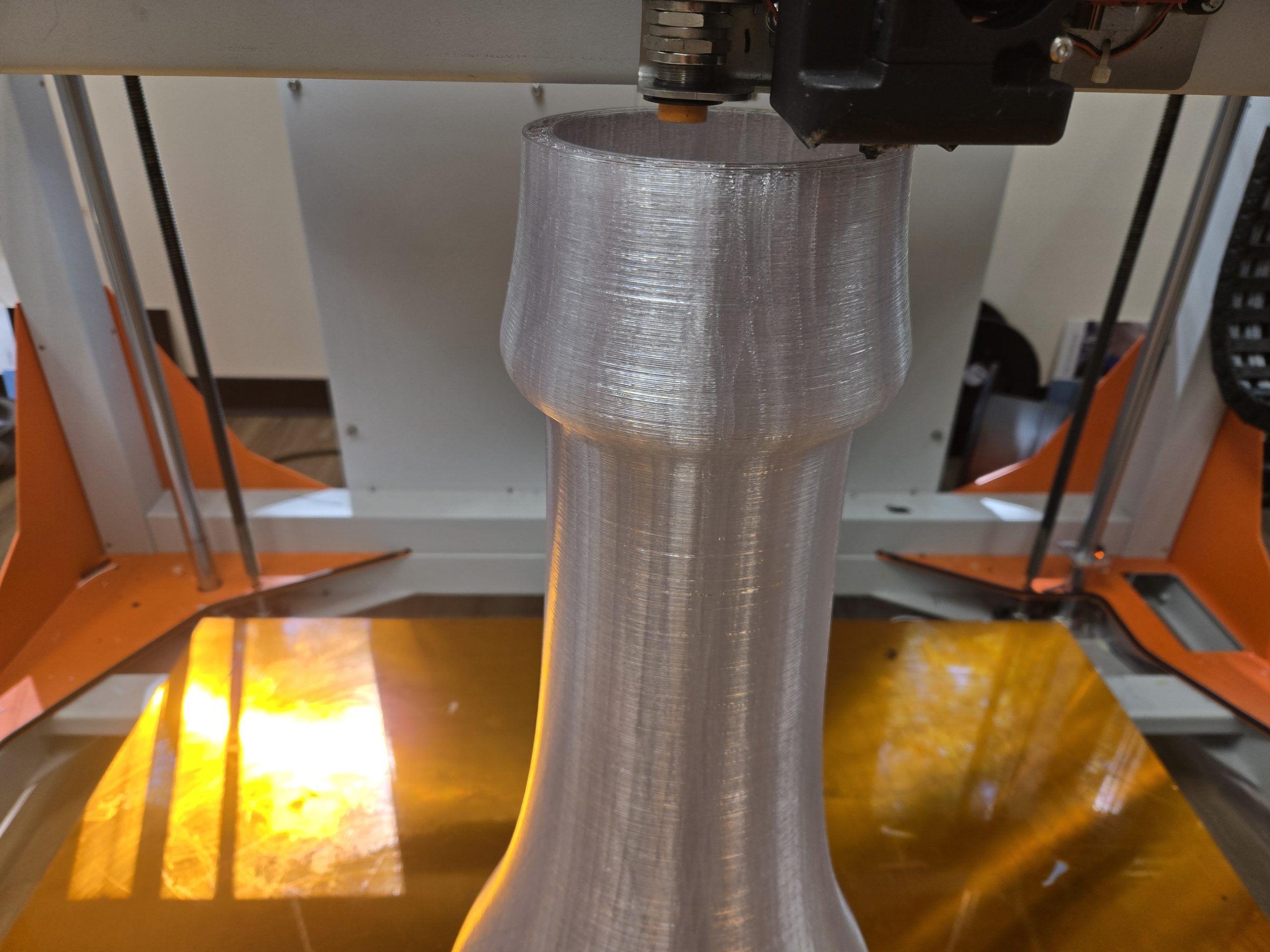
ASA is prone to shrinkage and warping, particularly as part size and infill increase. Enclosed printing, thermal management, bed adhesion, orientation, and geometry all affect the finished part. Manufacturer guidance commonly recommends enclosed machines for reliable ASA processing.
That matters for quoting: a design that looks simple in CAD can become a very different manufacturing problem when it is large, flat, highly constrained, or dimensionally sensitive.
Choosing ASA for real service.
Material names are starting points. The grade, printed construction, and application determine the actual result.
Is ASA better than ABS for outdoor use?
ASA is generally favored when UV and weather resistance are important. ABS remains useful for many indoor functional applications, but outdoor exposure is one of ASA's clearest advantages.
Is ASA waterproof?
ASA itself has useful water/weather resistance, but a printed assembly is not automatically watertight. Layer construction, walls, seams, fasteners, seals, and interfaces determine enclosure performance.
How heat resistant is ASA?
It depends on the grade and test method. Representative manufacturer HDT values are roughly in the high-80s to around 100°C range; use the specific TDS and actual load/environment for design decisions.
Can ASA be used for low-volume production?
Yes when the grade, printed process, part requirements, and economics fit. It is especially attractive for outdoor parts where mold investment is not justified.
Send the CAD and tell us what it has to survive.
Include quantity, sunlight/weather exposure, temperature, load, chemicals, critical interfaces, finish requirements, and target date. Relay can evaluate whether ASA is the right route.