
Large-Format FDM 3D Printing Services
Oversized functional parts without conventional tooling.
Large prototypes, tooling, fixtures, patterns, enclosures, and functional plastic components—with engineering review to determine the right material and production strategy for the application.
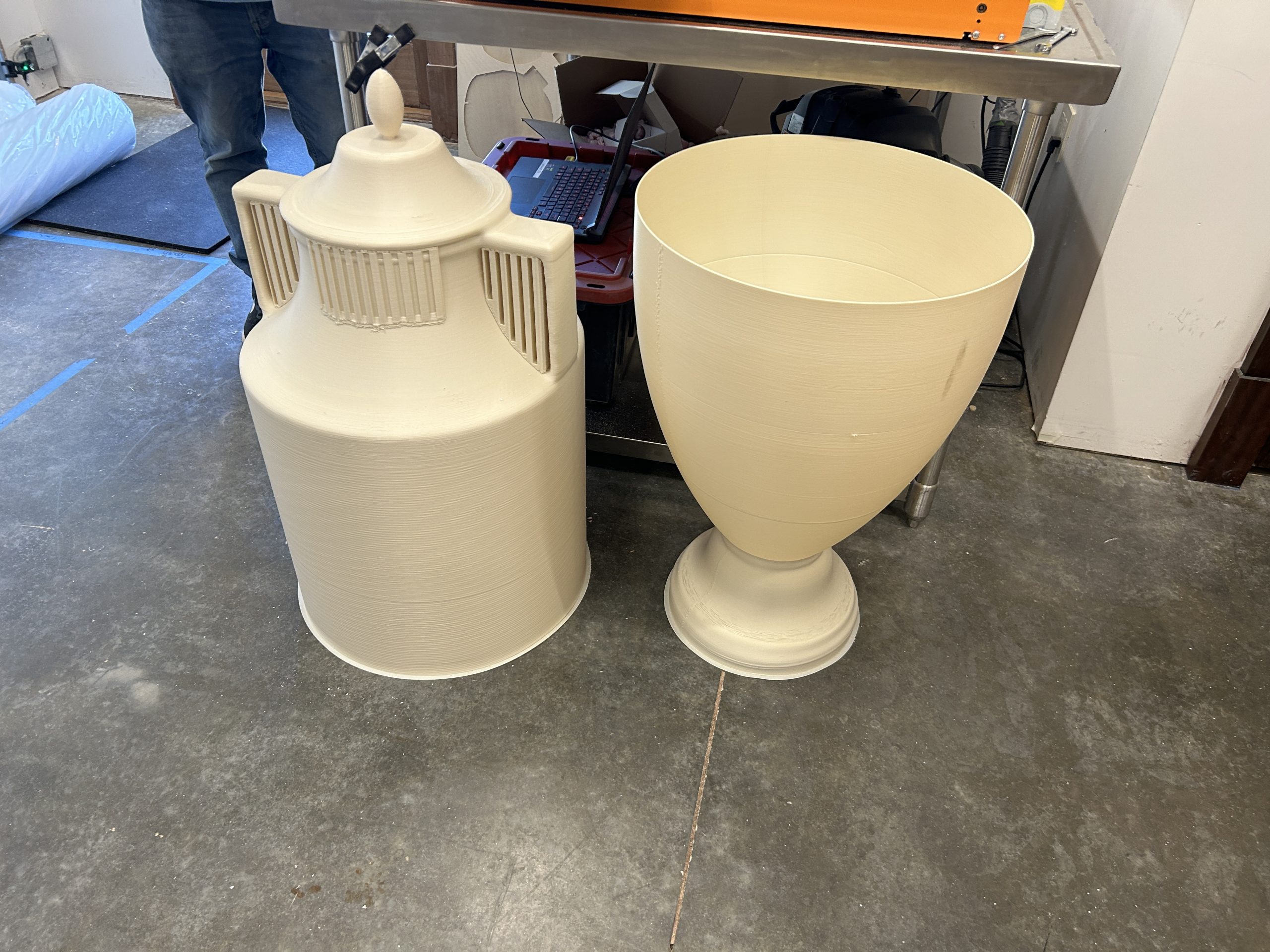
Large Parts Need More Than a Bigger Printer
As parts get larger, orientation, warpage, material behavior, print time, joining strategy, surface requirements, and handling all become more important. Relay reviews the actual application before committing to a manufacturing plan.
Some components are best produced in one build. Others are better engineered as sections for printing, shipping, finishing, or assembly. The goal is not simply to make the CAD fit a machine—it is to choose a practical route to the finished part.
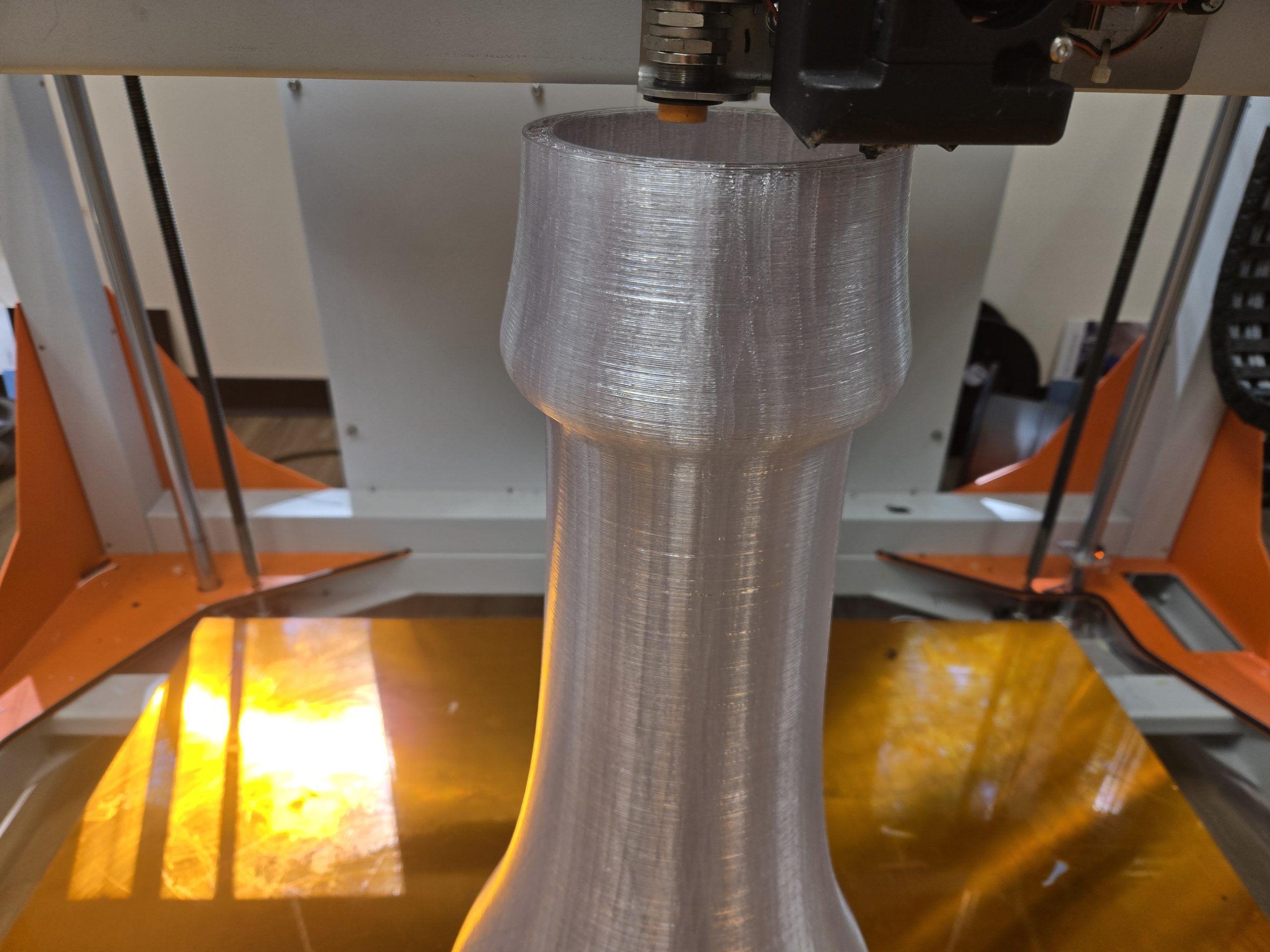
Large-format work should look like manufacturing work.
For Relay, the interesting use cases are not oversized trinkets. They are tools, structures, prototypes, and functional geometry that would otherwise be slow, awkward, or expensive to produce.
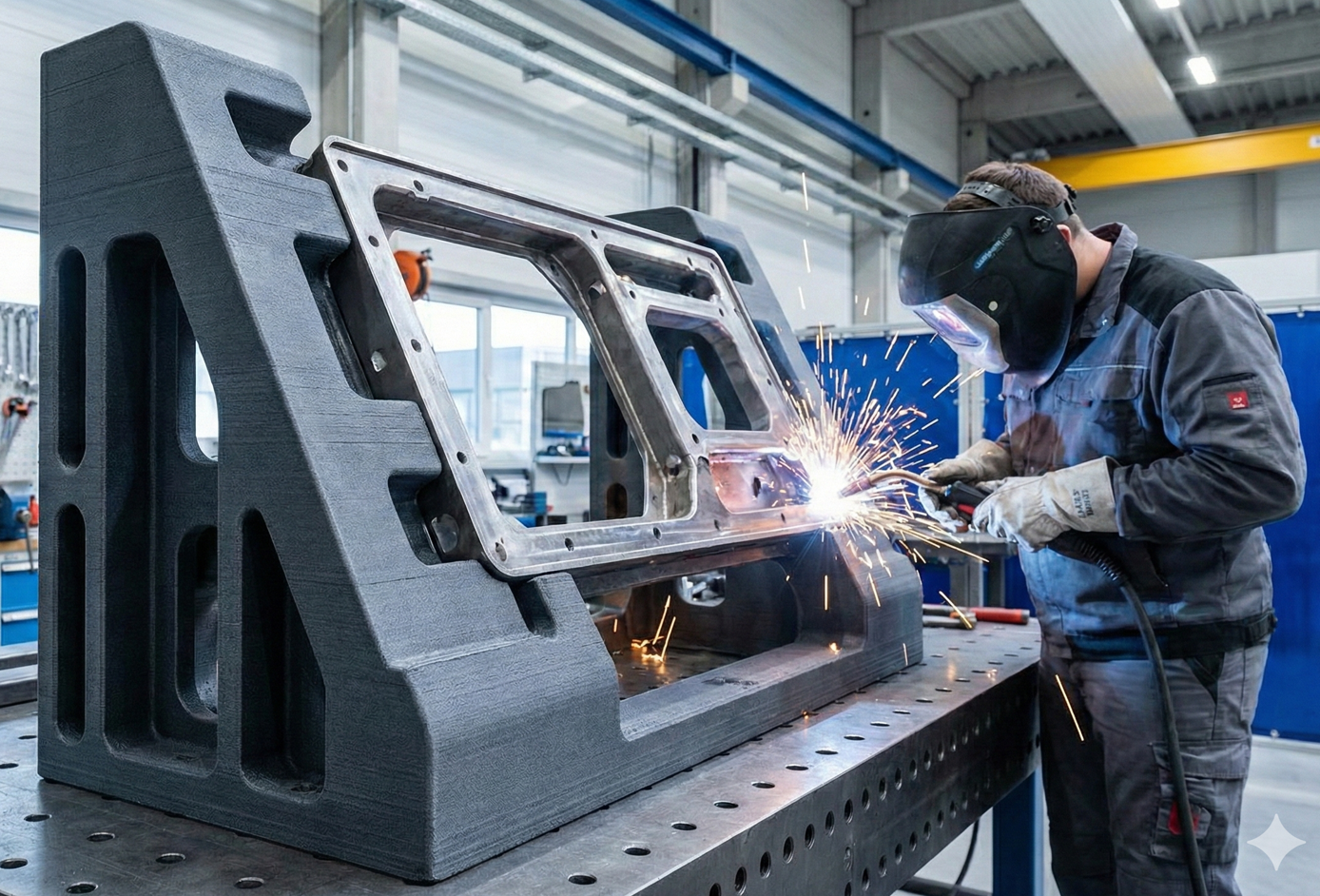
Large welding fixture
Printed tooling can replace a long machining cycle when the job needs size, repeatability, and fast iteration more than a billet of metal.
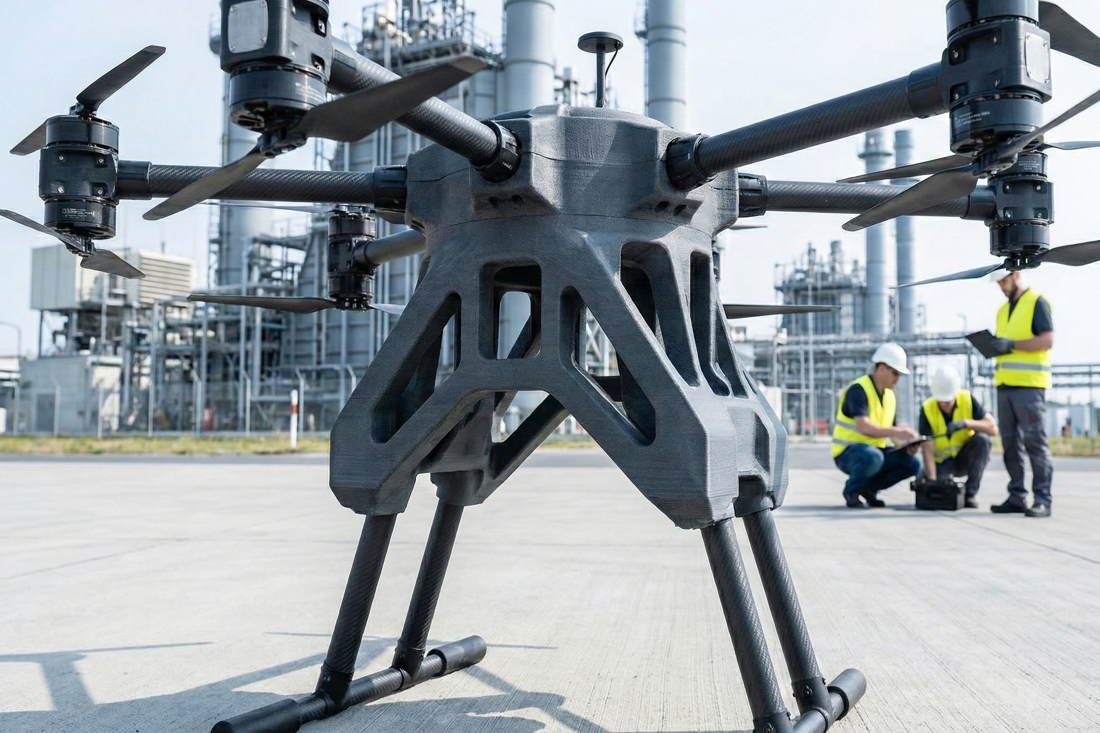
UAV structural airframe
Large geometry for integration, ground testing, and real-world design feedback.
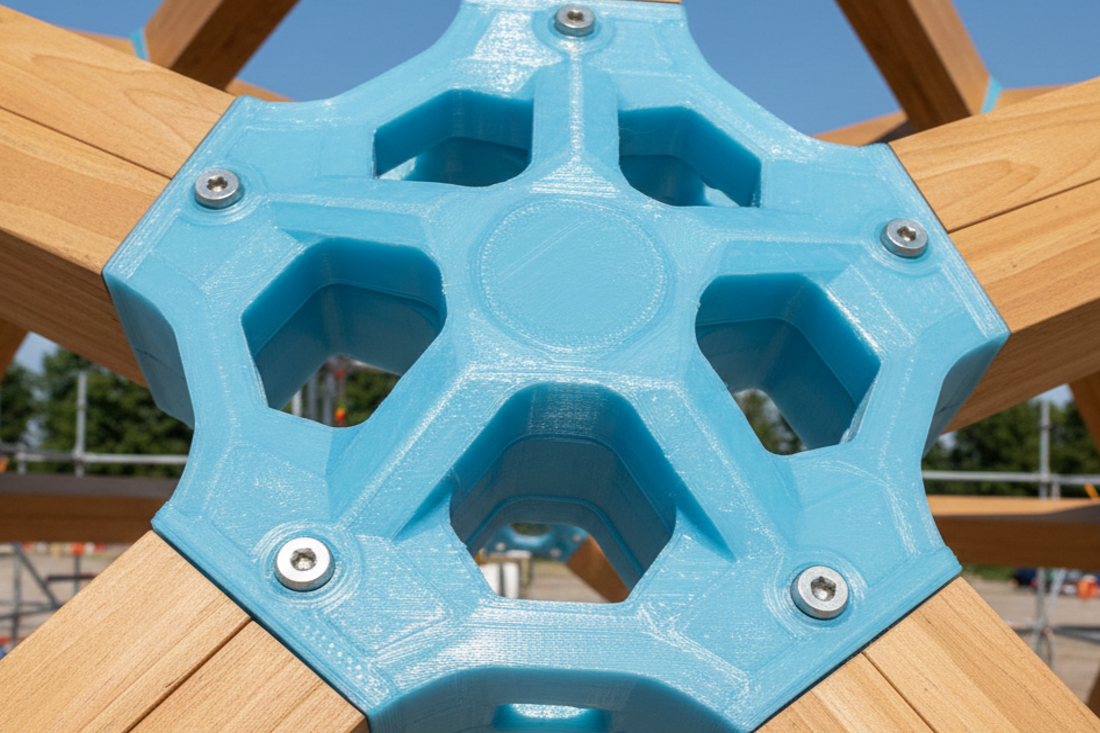
Structural connector node
Full-scale interfaces make fit, fastening, and assembly problems visible before committing to harder tooling.

Large reinforced casing
When stiffness, scale, and low volume matter more than injection-mold economics.
The machine envelope is only one of the decisions.
For a large part, the right plan is the one that survives printing, handling, shipping, assembly, and actual use—not simply the one that technically fits on a bed.

Print it whole
Best when the geometry, material behavior, handling, and finish requirements support a single build and the reduced assembly is worth it.
Split it on purpose
Engineered seams can lower risk, improve orientation, simplify finishing and shipping, or make a very large project easier to reproduce.
Change the process
If the real requirement points toward another additive method, machining, fabrication, or molding, we would rather identify that early than force LF-FDM into the job.
Tell us what the part has to survive.
For a large component, "strong material" is not a useful specification by itself. We care about the environment, load path, interfaces, finish, and how the part will be handled.

A large-format RFQ can be simple.
Send the model and the project context. Relay can work through the manufacturing details with you instead of asking you to pre-engineer the print process.
A few questions worth answering up front.
The goal is not to bury you in a giant FAQ. These are the decisions that most often change the quote or the build strategy.
How large can the part be?
Send the CAD or overall dimensions. The answer depends on geometry, material, orientation, machine availability, handling, and whether the part makes more sense as one build or engineered sections.
Can you split a large model and assemble it?
Yes, when the application allows it. We can place seams around geometry, loads, finish requirements, access, and shipping rather than simply slicing the model into arbitrary chunks.
Can LF-FDM be used for tooling and fixtures?
Often, yes. Large jigs, fixtures, patterns, nests, forms, and other production aids are some of the strongest use cases when conventional tooling is slow, expensive, or likely to change.
Do I need to know the material before requesting a quote?
No. If you know it, include it. Otherwise tell us about the load, temperature, outdoor exposure, chemicals, interfaces, and finish requirements and we can narrow the material family from there.
Send the CAD. We'll figure out the manufacturing plan.
You do not need to know the machine, material, orientation, or sectioning strategy first. Tell us what the part needs to do and when you need it.