
Carbon-Fiber Nylon 3D Printing Services
Stiffer, lightweight printed parts for tooling, brackets, robotics, and demanding functional applications.
PA-CF combines a nylon matrix with chopped carbon-fiber reinforcement to increase stiffness and dimensional stability compared with many unfilled nylons. Relay evaluates load, interfaces, environment, geometry, orientation, moisture, quantity, and finish before recommending it.
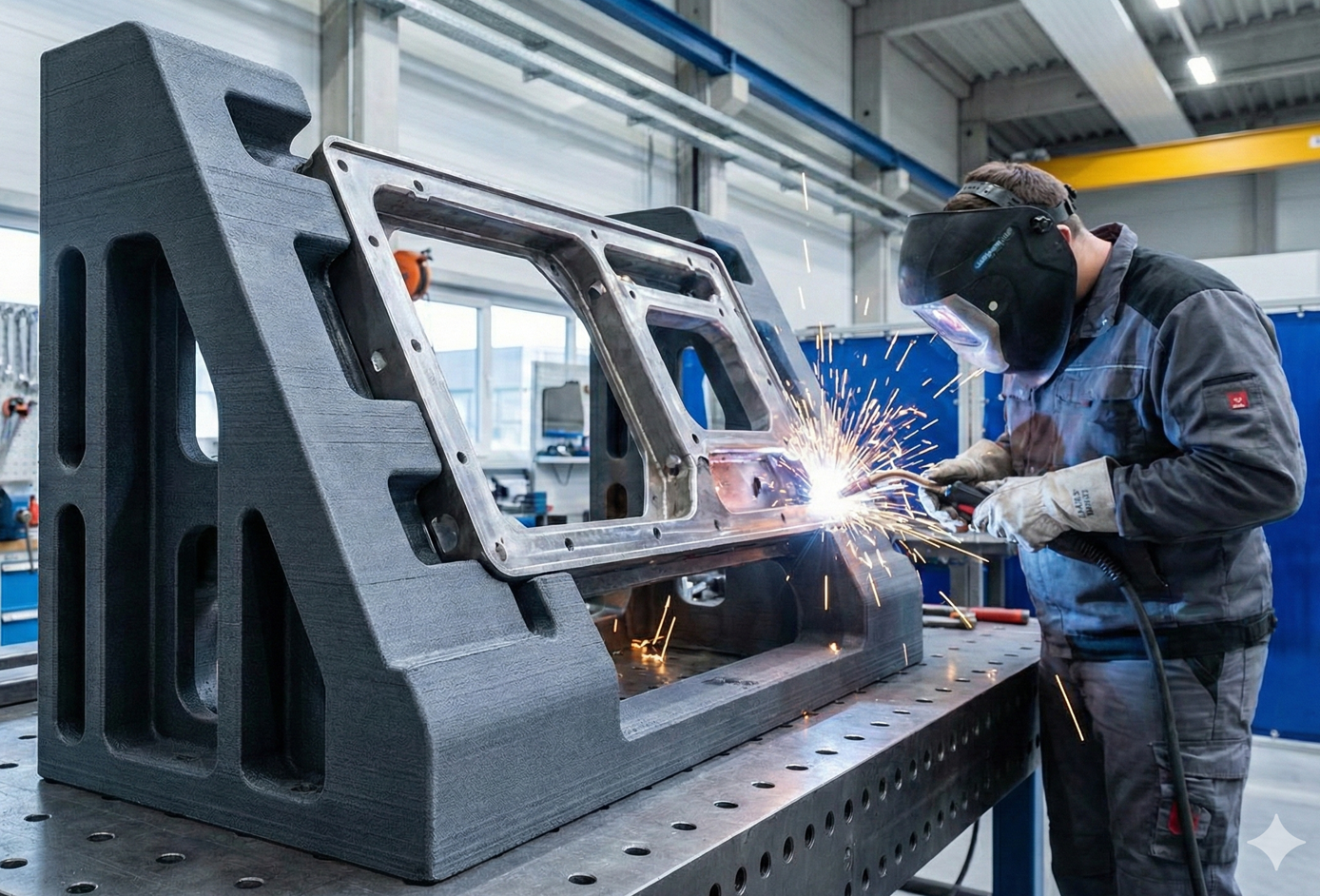
Use reinforcement where stiffness and geometry earn their keep.
Carbon-fiber nylon is compelling when a functional part needs more rigidity than an unfilled polymer while retaining additive manufacturing's geometry, iteration, and low-volume advantages.
Jigs & Fixtures
Stiffer nests, supports, tooling bodies, end effectors, and production aids.
Brackets & Structures
Lightweight functional geometry for mounts, frames, supports, and interfaces.
Robotics & Automation
End effectors, sensor mounts, gripper structures, and machine components.
UAV & Lightweight Hardware
Structures where stiffness-to-weight and rapid geometry iteration are useful.
Housings & Equipment Parts
Rigid enclosures, covers, mounts, and low-volume equipment components.
Repeat Production Parts
Digital batches where tooling is not justified or revisions remain likely.
Carbon fiber improves the material—it does not erase FDM physics.
PA-CF parts remain anisotropic printed structures. Layer orientation, wall design, local stress, holes, fasteners, inserts, bearing surfaces, and load direction should be considered with the application.
Nylon is also moisture-sensitive. Material conditioning and the expected service environment matter when dimensional stability and performance are important.
Tell us where the part is supported, loaded, clamped, bolted, or expected to deflect.
Threads, inserts, bearings, shafts, mating faces, fastener holes, and controlled dimensions deserve special attention.
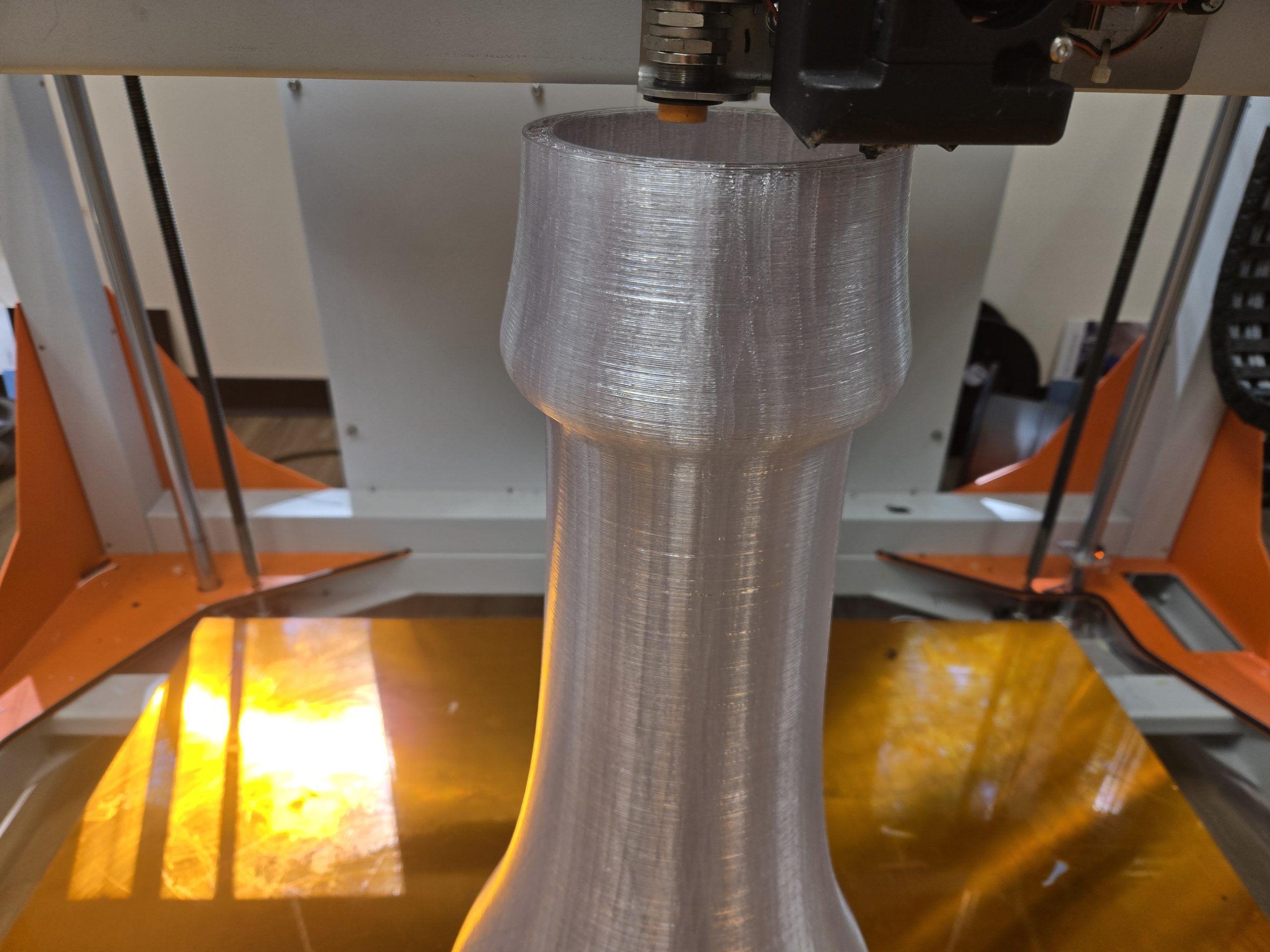
Stiffer is not automatically stronger—or better.
Carbon reinforcement can improve stiffness and dimensional behavior, but it can also change toughness, surface behavior, abrasion, and failure mode. Unfilled nylon may be preferable when ductility, flex, impact behavior, or wear performance matters more than rigidity.
Metal may still be the right answer for concentrated loads, temperature, bearing surfaces, precision, fatigue, certification, or service conditions beyond a printed polymer's practical envelope.
Is PA-CF suitable for end-use parts?
Often, when the grade, printed construction, load direction, environment, and interfaces match the application requirements.
Is carbon-fiber nylon stronger than normal nylon?
It is generally stiffer, but “stronger” depends on the property and loading condition. Unfilled nylon can be preferable when ductility or impact behavior is more important.
Can you add threaded inserts or hardware?
Yes where appropriate. Inserts and standard hardware can improve repeated fastening and critical interfaces, but the surrounding geometry and loads still need review.
Can PA-CF be used for low-volume production?
Yes when the material and FDM process meet the application and economics. It can be especially useful for repeat functional parts without dedicated tooling.
Send the CAD and the load case.
Include quantity, loads, support points, environment, critical interfaces, tolerances, and any existing material requirement. Relay can evaluate whether PA-CF is the right route.