
3D Printed Jigs & Fixtures
Custom tooling built around your part, process, and production floor.
Relay manufactures functional assembly jigs, inspection fixtures, positioning nests, drill guides, handling aids, and other custom tooling—without the lead time or hard-tooling commitment of conventional fabrication.
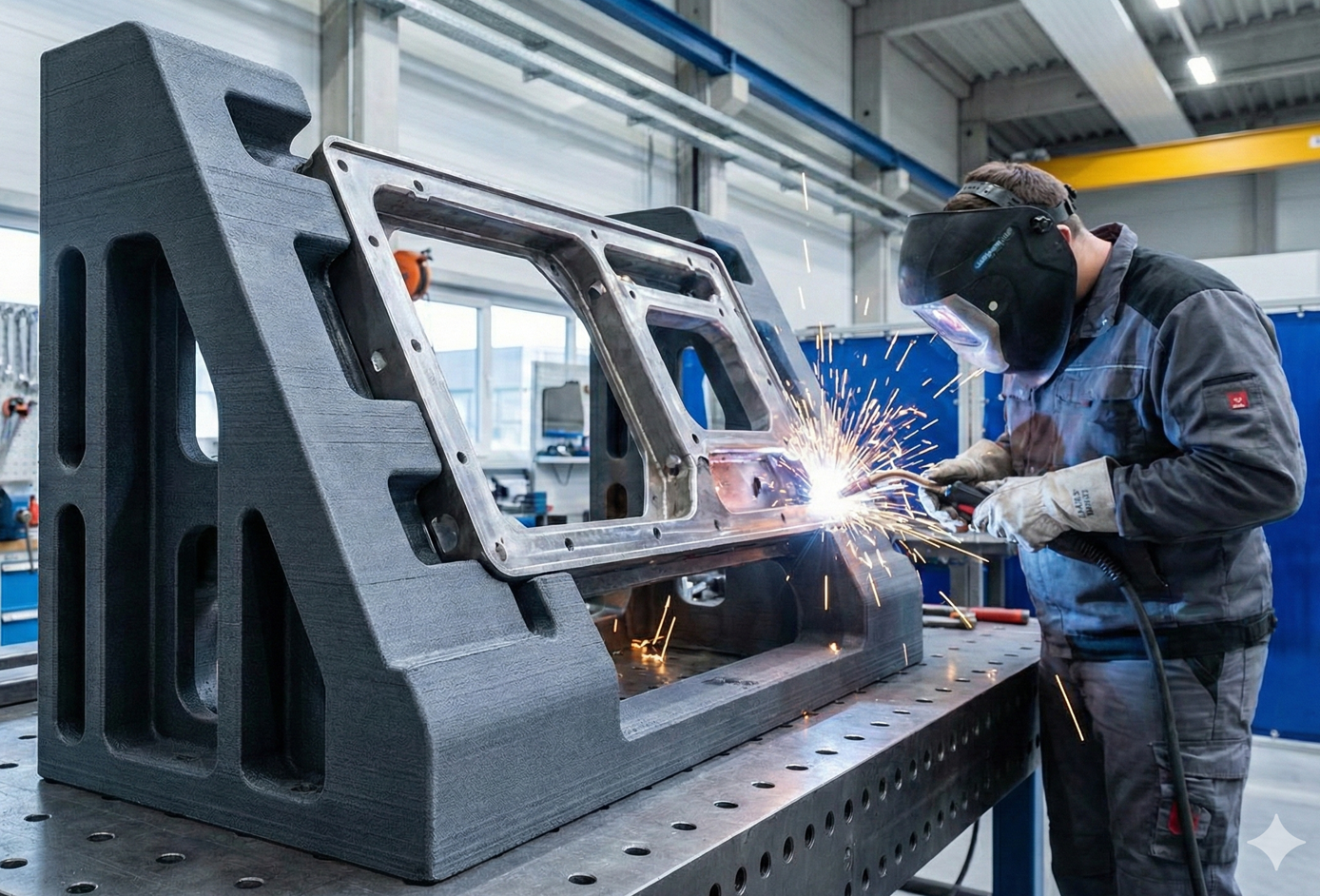
Tooling for the jobs between the machines.
Printed tooling is strongest where a custom shape helps an operator locate, hold, inspect, assemble, protect, or move a part—and where conventional tooling adds unnecessary cost or delay.
Assembly Jigs & Nests
Locate and support components during fastening, bonding, fitting, or repetitive assembly.
Inspection Fixtures & Gauges
Go/no-go checks, reference nests, and inspection aids for repeatable quality checks.
Drill & Alignment Guides
Repeat hole locations, alignment, marking, and positioning with application-specific geometry.
Workholding & Soft Interfaces
Custom supports, soft jaws, cradles, and protective contact geometry around unusual parts.
Handling & Line-Side Aids
Trays, carriers, guides, poka-yoke aids, and part-presentation tools for production teams.
Large Fixtures & Tooling
Oversized jigs, patterns, nests, and production aids can be evaluated through Relay's large-format FDM workflow.
Make the fixture fit the process—not the other way around.
Traditional machined tooling still makes sense when loads, temperature, wear, or precision demand it. But many production aids do not need to start as a block of aluminum.
FDM lets a fixture follow complex part geometry, incorporate ergonomic features, and change quickly when the product or operation changes. Metal inserts, bushings, fasteners, pads, and replaceable wear features can be incorporated where the application needs them.
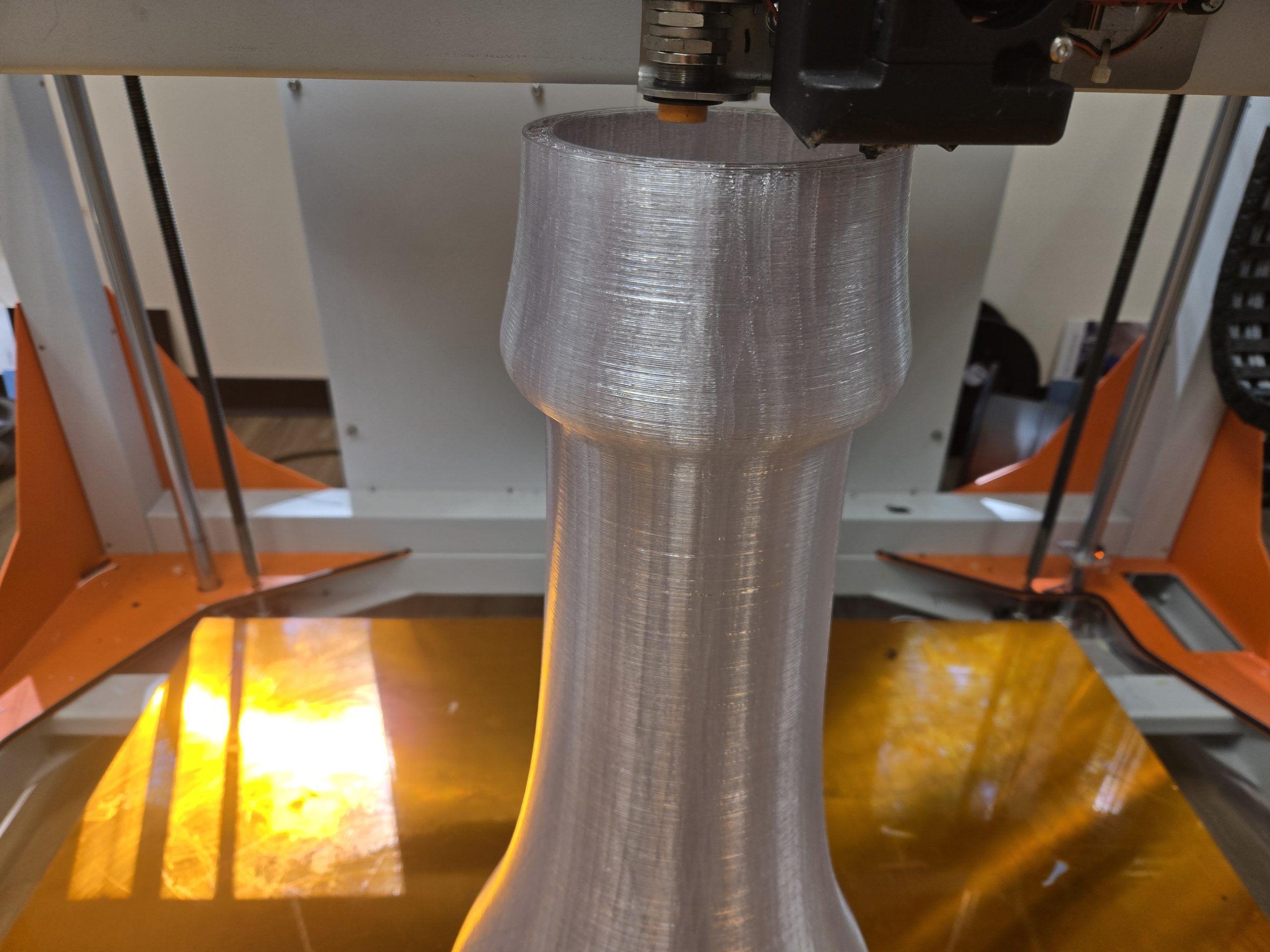
A tooling RFQ can start with the problem.
You do not need to fully engineer the additive solution before contacting Relay. Send the part geometry and explain the operation.
Printed does not mean plastic-only.
Production tooling can combine printed geometry with standard hardware where it matters. Bushings can protect drill locations, threaded inserts can handle repeated assembly, pads can protect cosmetic surfaces, and replaceable wear elements can extend service life.
The useful question is not “Can this be 3D printed?” It is “What does this tool need to survive, locate, repeat, and make easier for the operator?”
Can you make one-off fixtures?
Yes. One-off and low-quantity tooling is a natural fit when the geometry is custom or the process is still evolving.
Can you add metal inserts or bushings?
Yes, where appropriate. Hybrid printed tooling can use standard hardware at threads, wear points, drill locations, clamps, and other critical interfaces.
Which materials can be used?
The right material depends on load, heat, chemicals, wear, stiffness, impact, and dimensional requirements. ABS is one practical option for many indoor functional fixtures and tooling components, while other applications may call for ASA, reinforced nylon, TPU, or another material family.
Can you make large fixtures?
Yes, depending on geometry and requirements. Large-format FDM and intentionally sectioned tooling can both be evaluated for oversized production aids.
Send the part. Show us the operation.
Upload CAD and describe what needs to be located, held, inspected, assembled, drilled, protected, or moved. Relay will review the application and propose a practical manufacturing route.